
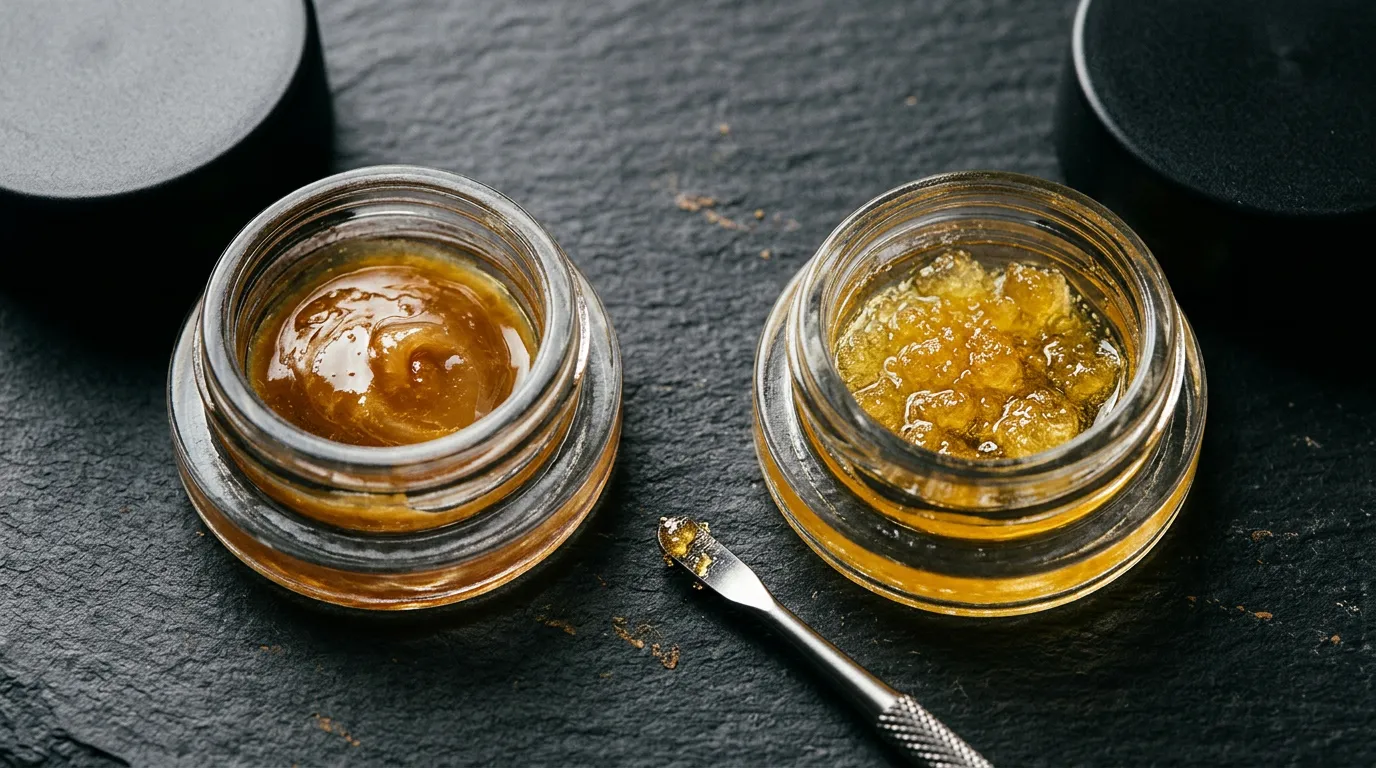
The CBD concentrate market has matured significantly beyond the early days of bulk isolate and generic distillate. Buyers who have developed a palate for quality flower have increasingly extended that same critical framework to concentrates, and the two categories that dominate the premium end of the market, hash rosin and live resin, represent meaningfully different approaches to extraction with meaningfully different results in the jar.
Understanding what distinguishes them is not just a technical exercise. It directly informs purchasing decisions, storage requirements, consumption methods and what to expect from the product before you open the container. The quality of the starting material is the single most important variable in both categories, and the best hash rosin and live resin producers are obsessive about their input flower: the same characteristics that define premium sungrown CBD flower in terms of terpene complexity and trichome density translate directly into superior concentrate output regardless of extraction method.
What Hash Rosin Is and How It Is Made
Hash rosin is a solventless concentrate produced by applying heat and pressure to hash, which is itself an extract of the trichome heads separated from the plant material. The production chain for quality hash rosin starts with the flower, which is processed into ice water hash by agitating frozen plant material in ice water to separate the trichome heads, filtering the result through a series of mesh screens to isolate trichomes by size and quality, then freeze-drying the separated trichomes into a powder or pressing them into a cake.
The best ice water hash, graded on a five-star system where six-star represents the highest purity, is then pressed under low heat and pressure to melt the trichome heads and release the oil they contain, producing hash rosin. The entire process involves no chemical solvents at any stage, which is the defining characteristic of solventless extraction and the primary quality argument for rosin over solvent-based extracts.
Why Solventless Matters for the Terpene Profile
The absence of solvents in hash rosin production has direct implications for terpene preservation. Hydrocarbon solvents like butane and propane, used in BHO and live resin production, are highly effective at extracting cannabinoids and many terpenes, but the post-extraction purging process required to remove residual solvent involves heat and vacuum that degrades a portion of the most volatile terpene compounds. Solventless extraction avoids this degradation step entirely.
The result in the jar is a terpene profile that experienced concentrate consumers describe as more complete and more representative of the original flower than solvent-based extracts. Top-tier hash rosin from quality starting material has an aroma complexity that reflects the full terpene profile of the input hash in a way that even excellent live resin rarely matches.
What Live Resin Is and How It Differs
Live resin is a solvent-based concentrate that distinguishes itself from other hydrocarbon extracts through one critical step in the production process: the starting material is fresh-frozen rather than dried and cured. Immediately after harvest, the plant material is frozen at very low temperatures, which locks the terpene profile in its harvest-fresh state before the drying and curing process can alter it.
This fresh-frozen starting material is then extracted with hydrocarbon solvents, typically butane or a butane-propane blend, under closed-loop conditions. The resulting extract is then purged of residual solvent under controlled heat and vacuum conditions to produce the final live resin product, which retains a terpene profile closer to the living plant than any dried-and-cured flower extract can achieve.
The Terpene Trade-Off Between the Two Methods
The terpene comparison between hash rosin and live resin is the central quality debate in the premium concentrate market, and it does not have a clean winner. Live resin from well-grown fresh-frozen starting material captures terpenes that are lost during the drying and curing process, including highly volatile monoterpenes that evaporate quickly at room temperature and would not survive even the most careful cure. In this specific dimension, live resin can offer terpene compounds that no hash rosin can contain, because those compounds are gone before the flower is dry enough to make hash from.
Hash rosin, however, preserves the cured terpene profile with greater fidelity than live resin’s solvent purging process allows. The difference is not which method produces more terpenes in absolute terms but which produces a profile closer to what the consumer experiences when smoking quality cured flower. For buyers whose primary reference point is premium flower rather than the living plant, hash rosin typically delivers the more familiar and expected profile.
Price, Storage and Practical Considerations
Hash rosin commands a significant price premium over live resin at comparable quality levels, reflecting the labor-intensive production process and the lower yield per pound of starting material. A gram of top-tier six-star hash rosin from a reputable producer will cost substantially more than a gram of quality live resin, and the price difference widens further at the very top of the market where the best rosin is produced in small batches from single-cultivar starting material.
Storage requirements are similar for both: low temperature and minimal light exposure are essential for preserving terpenes and preventing cannabinoid degradation. Both products store best in airtight glass containers in a refrigerator or freezer for long-term storage, with the understanding that repeated temperature cycling from cold to room temperature accelerates degradation. Buying in quantities that can be consumed before significant degradation occurs is better practice than bulk purchasing for either category.

