
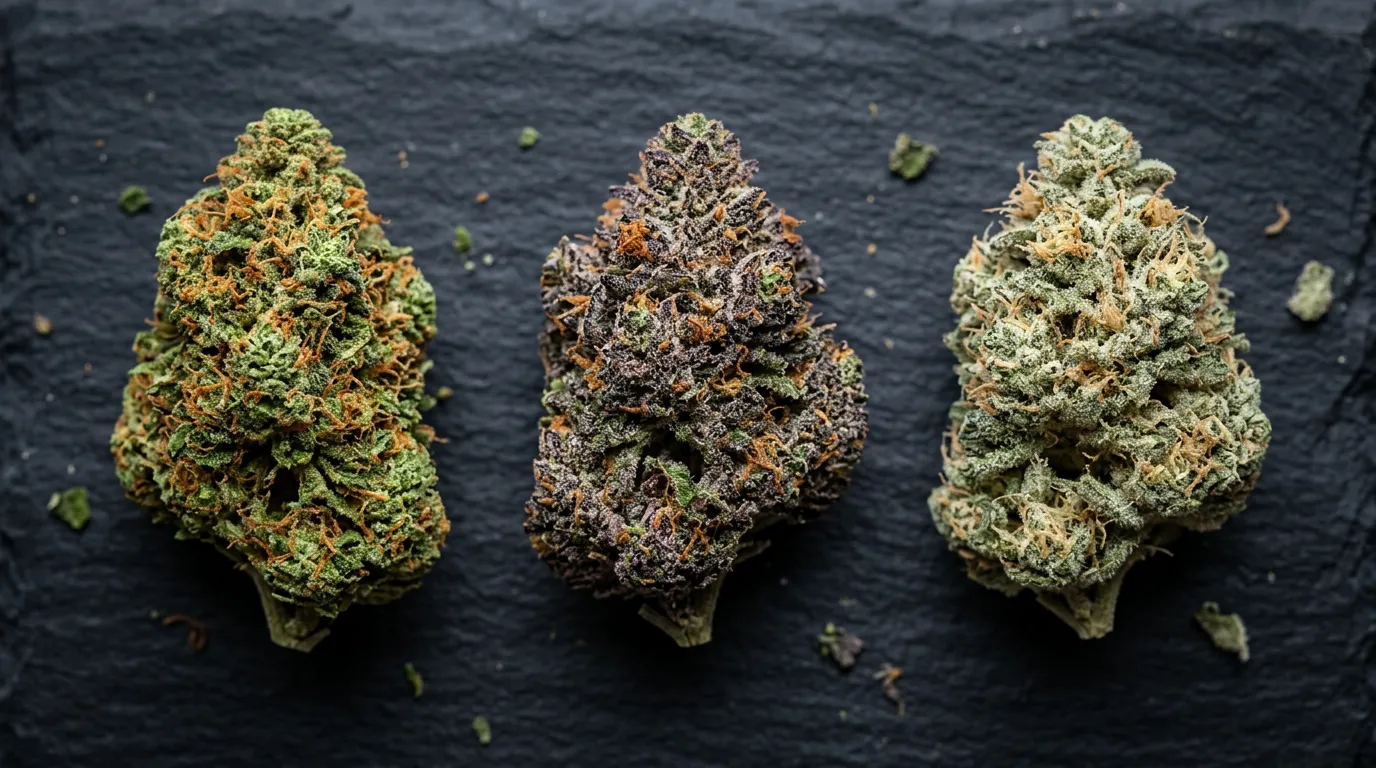
Most CBD flower buyers learn quickly to read a lab report. Fewer know how to read the flower itself. Visual assessment is not a substitute for analytical testing, but it is a fast, reliable first filter that experienced buyers use before they ever open a certificate of analysis, because a flower that fails the visual test rarely redeems itself on paper.
Color is the most immediately legible visual quality signal, and also the most misunderstood. The assumptions many buyers bring to color evaluation — greener is fresher, purple means premium, pale means poor — are partly right and partly wrong in ways that are worth understanding precisely. The same skills that help you evaluate sungrown CBD flower against greenhouse or indoor product apply directly to color assessment across all cultivation types.
The Green Spectrum : What Different Shades Actually Indicate
The baseline color of a quality CBD flower is green, but the specific shade and its distribution across the bud tells a more detailed story than simply green versus not green. Vivid, saturated greens in the range from lime to forest green indicate chlorophyll content that has been well-preserved through the drying and curing process, which is the first positive signal. Chlorophyll preservation requires a slow cure at controlled humidity and temperature, conditions that also preserve terpenes and protect cannabinoids from oxidative degradation.
Yellowing in CBD flower is the most common color quality signal buyers encounter, and it is almost always negative. Yellow or straw-colored buds indicate one of several problems: overly rapid drying at high temperature that degrades chlorophyll and drives off volatile terpenes, oxidative degradation from extended exposure to light or air during storage, or harvest timing that was too late in the plant’s lifecycle. None of these explanations produce better smoking flower, and yellowing is a reliable indicator to pass.
Brown Coloration : The Spectrum from Acceptable to Problematic
Brown in CBD flower exists on a spectrum. Light brown pistils, the hair-like structures that emerge from the calyx during flowering, are completely normal and indicate a flower harvested at the right point in its maturity cycle. Pistils begin orange to red and brown as the plant matures, and a mix of orange and brown pistils on otherwise green flower is a positive maturity signal rather than a quality concern.
Dark browning in the plant material itself, as opposed to the pistils, is a different matter. Brown or tan calyxes and leaves around the bud structure indicate heat damage during drying, prolonged storage without proper humidity control, or oxidative degradation. Flower that is uniformly brown or tan rather than green with brown pistils has lost a significant proportion of its terpene content and its cannabinoids will have partially degraded regardless of what the original lab report said.
Purple Flower : Premium Signal or Marketing Myth
Purple CBD flower commands a premium in most markets and has developed a reputation as a quality indicator that deserves closer examination. The purple coloration in hemp and cannabis comes from anthocyanins, water-soluble pigments that are expressed in the plant when temperatures drop below a certain threshold during the flowering period, either naturally in outdoor late-season cultivation or artificially through cold stress techniques in controlled environments.
The quality implications of purple coloration are more nuanced than the premium pricing often suggests. In sungrown hemp harvested late in the season as temperatures drop, purple expression is a natural accompaniment to full terpene development and cannabinoid maturation, and the two things tend to go together in well-grown outdoor flower. In this context, purple is a genuine quality signal because it indicates the conditions that also produce the best terpene profiles.
When Purple Is Induced Rather Than Natural
In indoor cultivation, purple coloration can be induced artificially through cold stress protocols that stress the plant into anthocyanin expression without the accompanying terpene development that natural seasonal cooling produces. Purple indoor flower produced this way looks visually striking but does not have the quality advantages associated with naturally purple outdoor hemp. The color alone is not a reliable quality indicator without knowing how it was produced.
Experienced buyers cross-reference purple coloration with the flower’s terpene percentage on its COA and with its aroma. Genuinely quality purple flower from outdoor or greenhouse cultivation will have a rich, complex terpene profile that is perceptible on the nose even through sealed packaging. Purple flower with a weak or flat aroma has likely been cold-stressed for color rather than grown for quality.
Trichome Density as the Most Reliable Visual Quality Indicator
If color is the first visual filter, trichome coverage is the more reliable one. Trichomes are the resinous glands on the surface of hemp flowers where cannabinoids and terpenes are synthesized and stored, and their density and condition visible to the naked eye or under a loupe is a direct indicator of the cannabinoid and terpene content of the flower.
Quality CBD flower should be visibly coated in a frosted or crystalline layer of trichomes that catches light and gives the bud a resinous, sticky quality. Flower with sparse trichome coverage will typically underperform on the COA relative to its stated percentage, because the density of trichomes is what determines how much of the flower’s weight is actually cannabinoid-rich resin versus structural plant material.

