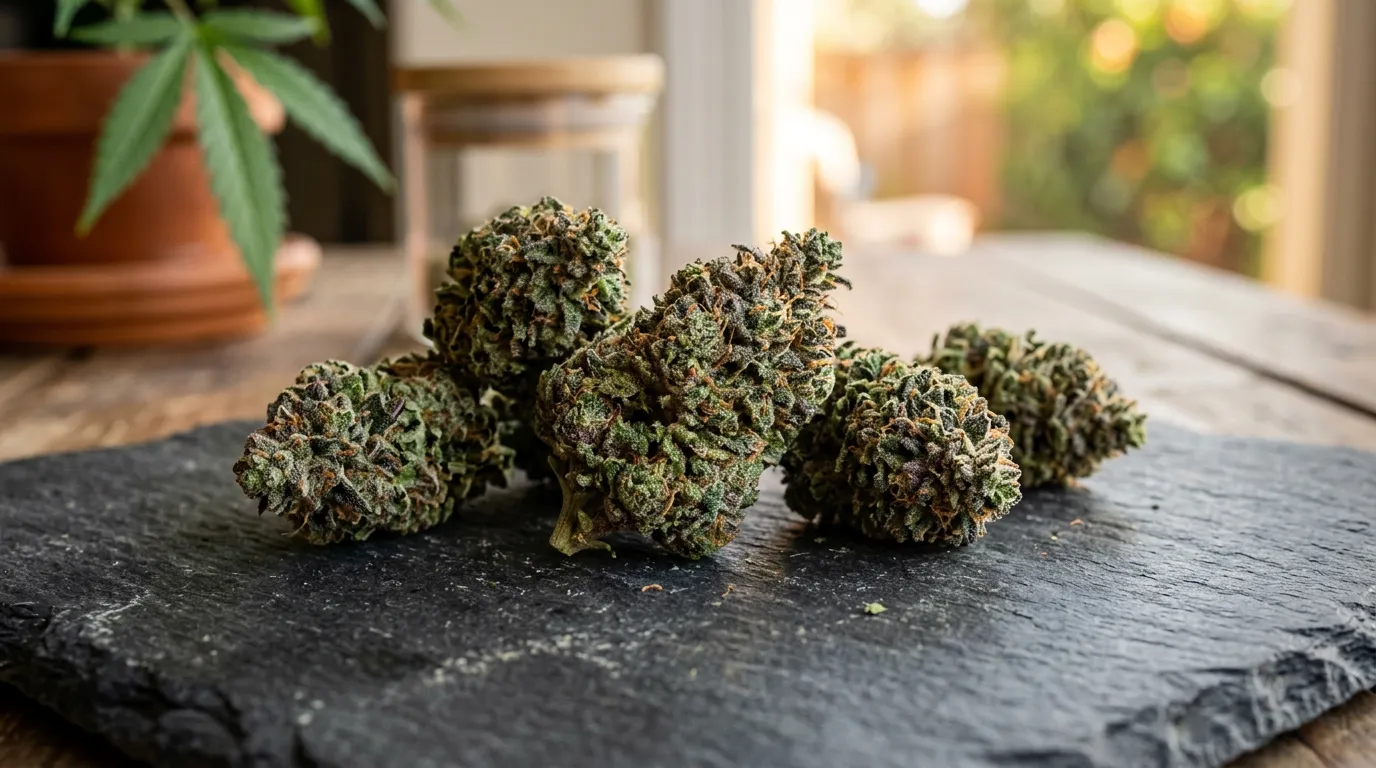
Walk into any premium CBD flower retailer in the United States or Europe and the same strain names appear with remarkable consistency: OG Kush, Gelato, Runtz, Girl Scout Cookies, Wedding Cake, Zkittlez. These are not random selections from a catalogue of available hemp varieties. They are the elite of Californian cannabis breeding, developed over decades in the underground growing culture of the Emerald Triangle and Southern California, and they have become the defining reference point for premium CBD flower in every market where quality matters more than price.
The dominance of California genetics in the premium CBD flower segment is not marketing. It reflects specific genetic and agronomic characteristics that distinguish these varieties from conventional European industrial hemp strains, and understanding what those characteristics are is the starting point for making informed purchasing decisions in a market where the word premium is used far more freely than it is earned.
The Emerald Triangle : where the genetics were forged
The Emerald Triangle, encompassing the counties of Mendocino, Humboldt and Trinity in northern California, is the geographic origin of much of what defines premium cannabis genetics globally. The region’s combination of isolation, climate and the specific culture of its growing community created conditions over several decades that produced genetic refinement unmatched anywhere else in the world.
The isolation was essential. Growers in the Emerald Triangle operated outside of commercial pressures for most of their history, selecting plants over successive generations for qualities that mattered to them and their customers: aroma complexity, trichome density, visual appeal and the specific character of the effect produced. Unlike commercial agricultural breeding, which optimizes for yield, disease resistance and mechanical harvestability, Emerald Triangle breeding optimized for qualities that are far harder to measure but immediately apparent to any experienced consumer.
The climate of the northern California coast, with its combination of long summer days, significant diurnal temperature variation and the marine influence of the Pacific, creates specific stress conditions on maturing plants that stimulate terpene and resin production as a biological response. Varieties bred and selected in this environment over generations have developed a genetic predisposition toward high terpene expression that their descendants maintain even when cultivated under indoor conditions in different climates.
What makes Cali genetics different from European hemp varieties
The distinction between a CBD flower produced from authentic California genetics and one produced from conventional European industrial hemp strains is immediately apparent to anyone who has experienced both. It is not a subtle difference that requires laboratory analysis to detect, though the terpene panels of the two categories confirm what the nose perceives directly.
European industrial hemp varieties were developed primarily for fiber and seed production, with cannabinoid content and aromatic richness as secondary considerations at best. The varieties listed in the EU Common Catalogue of Varieties, which forms the approved cultivar list for legal hemp cultivation in Europe, include many strains that produce adequate CBD concentrations but modest terpene profiles dominated by myrcene without the complexity that characterizes California genetics.
California cannabis genetics, when adapted into hemp-compliant cultivars, bring a terpene diversity and concentration that reflects decades of selective breeding for aromatic richness. A flower from an authentic Gelato-derived hemp cultivar will show a terpene profile that includes limonene, beta-caryophyllene, linalool and multiple secondary terpenes in proportions that together produce the complex, sweet and slightly fruity aroma characteristic of the Gelato family. A generic industrial hemp flower will typically show a profile dominated by a single terpene, usually myrcene, with limited secondary complexity.
The trichome density is the second major distinguishing characteristic. California genetics, bred over generations for maximum resin production, consistently produce flowers with trichome coverage that is visually apparent and measurable in higher cannabinoid and terpene concentrations per gram of flower. This resin density is not purely cosmetic: it directly correlates with the concentration of bioactive compounds in the product.
The strains that define Cali genetics in CBD flower
OG Kush is the foundational variety from which much of modern California cannabis genetics derives. Its history and terpene profile are covered in depth in our dedicated guide to OG Kush CBD, but its significance in the context of Cali genetics cannot be overstated: it is the genetic origin point of hundreds of hybrid varieties that define the premium market today.
Gelato, bred by Sherbinksi in Los Angeles from a Sunset Sherbet and Thin Mint Girl Scout Cookies cross, introduced a new aromatic category to cannabis breeding that has been replicated in dozens of subsequent varieties. Its sweet, creamy aroma with notes of vanilla and stone fruit represented a departure from the earthy and fuel-dominant profiles that had characterized premium cannabis up to that point, and its visual expression, purple and orange tones over dense, trichome-covered buds, became the aesthetic template for an entire generation of premium CBD flower products.
Runtz, born from a Zkittlez and Gelato cross, took the sweet aromatic direction of Gelato further into tropical fruit territory, producing a profile that many consumers describe as the most immediately appealing in the premium segment. Its terpene expression, dominated by limonene and caryophyllene over a sweet base, produces one of the most distinctive and recognizable aromas in contemporary CBD flower.
Girl Scout Cookies, developed by the Cookie Fam in Oakland, occupies a middle position between the earthy complexity of the OG family and the sweet expressions of the Gelato lineage. Its beta-caryophyllene dominance produces a spiced, baked cookie aromatic profile that has proven exceptionally versatile as a breeding parent and exceptionally consistent as a consumer experience.
How to identify authentic Cali genetics in a CBD flower
The proliferation of California strain names on CBD flower products has made genuine identification more important and more challenging simultaneously. The presence of a strain name on a package is not evidence that the product contains authentic genetics from that lineage.
The terpene panel of the laboratory certificate is the most reliable indicator of genetic authenticity. An authentic OG Kush CBD should show limonene as a leading terpene with beta-caryophyllene and myrcene present in meaningful concentrations. An authentic Gelato should show limonene dominance with linalool contributing to the sweet, creamy aromatic character. A product claiming to be Runtz should show tropical terpene expression including limonene and beta-caryophyllene over the sweet base that defines the Runtz profile.
The visual presentation of the flower is a secondary indicator that experienced buyers use alongside the certificate. Authentic California genetics in hemp form produce dense, compact buds with visible trichome coverage that catches light across the entire surface of the flower, including the sugar leaves. The color expression varies by variety but authentic genetics typically show nuanced coloring, purple, orange, deep green, rather than the uniform light green of industrial hemp varieties.
Cultivation method documentation from the retailer provides a third indicator. California genetics express their full genetic potential most completely under indoor cultivation conditions that allow precise environmental control. Outdoor cultivation can produce acceptable results with well-adapted genetics, but the terpene concentration and bud density of indoor-grown California-derived CBD flower are consistently higher than the outdoor equivalent.